
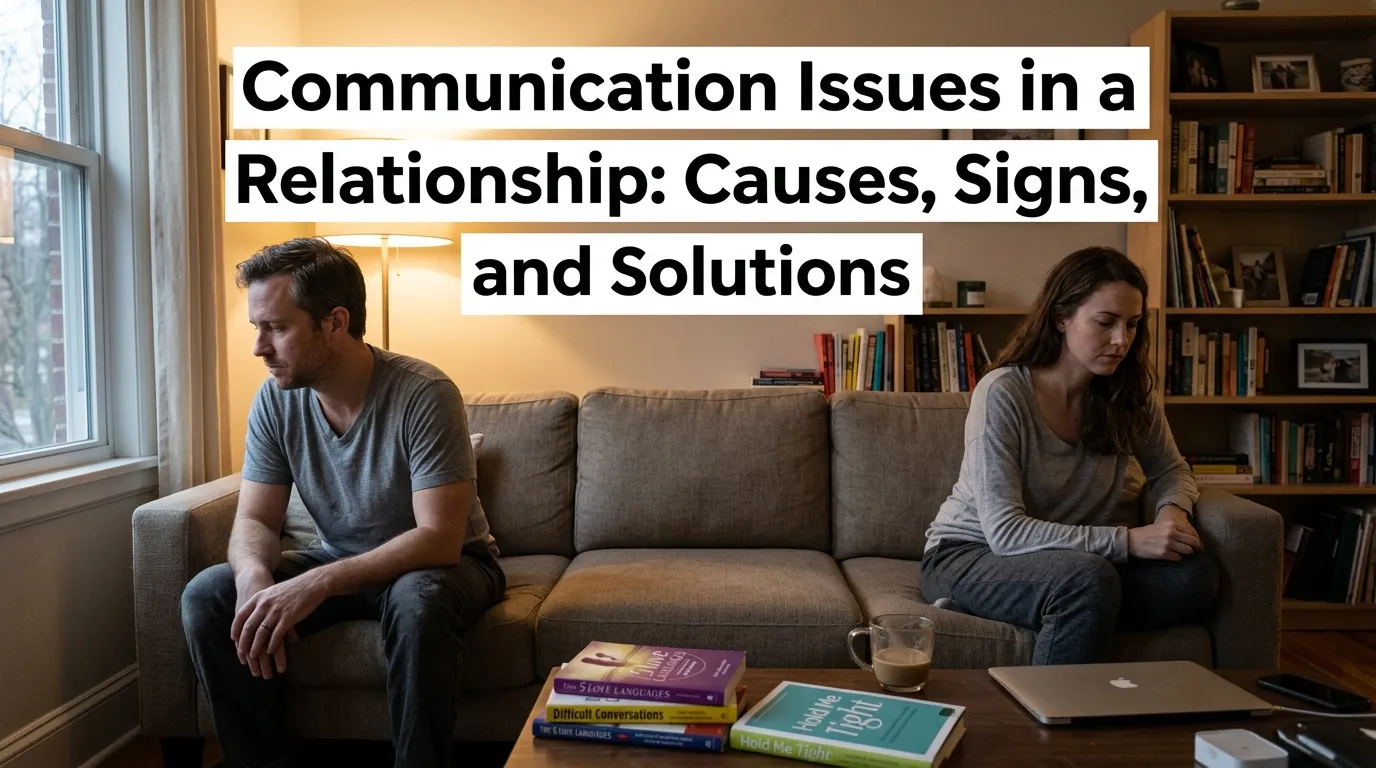
Are you feeling misunderstood by your partner? Overcoming communication issues in a relationship requires recognizing hidden emotional triggers and learning proven strategies to rebuild trust and a deep connection.
This comprehensive guide explores the hidden root causes of relationship friction, from insecure attachment styles to daily stress. You will discover practical strategies, expert insights, and actionable steps to transform destructive arguments into meaningful dialogues that strengthen your emotional bond.
Understanding Communication Issues in a Relationship
Every couple experiences disagreements. However, when simple misunderstandings escalate into bitter arguments or silent resentment, you might be facing deeper systemic problems. Addressing communication issues in a relationship is rarely about simply learning to talk more. It is about learning to connect, understand, and validate the emotions driving the conversation.
Partners often assume that poor communication stems from a lack of vocabulary or poor timing. In reality, the foundation of a healthy dialogue relies heavily on emotional safety. When individuals feel threatened, judged, or dismissed, their natural defense mechanisms activate. This reaction turns conversations into battlegrounds. Recognizing the psychological elements at play represents the first vital step toward healing. If you find yourself trapped in cyclical arguments, identifying the true root cause will guide you toward a sustainable resolution.
The Hidden Causes of Communication Breakdowns
 Many couples treat the symptoms of poor communication without addressing the disease. To truly resolve communication issues in a relationship, we must examine the underlying psychological and emotional factors that dictate how partners interact.
Insecure Attachment Styles
Our earliest caregivers shape how we connect with others. These early experiences form our attachment styles. Individuals with an anxious attachment style might resort to protest behaviors, such as demanding constant reassurance or lashing out when they feel ignored. Conversely, those with an avoidant attachment style often withdraw during conflict to protect themselves from feeling overwhelmed. When these two styles interact, they create a volatile dynamic. Healing begins when you understand your partner’s attachment history. You can learn more about this by exploring resources on Bowlby’s Attachment Theory.
Unmet Emotional Needs
Humans possess core emotional needs: to feel loved, respected, secure, and significant. When a relationship fails to meet these needs, frustration accumulates. A partner might complain about household chores, but the underlying message often screams, “I do not feel valued.” Treating the surface complaint without addressing the emotional deficit guarantees that communication issues in a relationship will persist.
Fundamental Value Clashes
Sometimes, partners communicate perfectly well but simply disagree on core life values. Differences regarding financial management, parenting philosophies, or career ambitions create significant friction. Navigating these differences requires compromise and mutual respect. You must establish shared relationship goals to ensure both partners feel their core beliefs are honored.
Past Trauma and Emotional Baggage
Unresolved trauma deeply influences how people interpret words and actions. A seemingly innocent comment might trigger a traumatic memory, causing a disproportionate emotional reaction. Addressing past trauma often requires the intervention of a licensed professional. Trauma-informed couples therapy can provide a safe environment to unpack these complex emotional responses without damaging the current partnership.
Key Signs You Are Experiencing Poor Communication
Identifying destructive patterns early can prevent long-term damage. While every couple argues differently, clinical psychologists have identified specific behaviors that signal severe communication issues in a relationship.
The Four Horsemen of Conflict
Dr. John Gottman famously identified four communication styles that predict relationship failure with high accuracy.
- Criticism: Attacking your partner’s character instead of addressing a specific behavior.
- Defensiveness: Playing the victim to avoid taking responsibility for a mistake.
- Contempt: Using sarcasm, name-calling, or eye-rolling to assert moral superiority.
- Stonewalling: Completely withdrawing from the interaction and refusing to engage.
Constant Interruptions and Over-Talking
If you listen merely to formulate your next response rather than to understand your partner, you are not truly communicating. Interrupting signals a lack of respect for the speaker’s perspective. This habit destroys emotional safety and ensures the speaker feels invalidated.
Keeping Score of Past Wrongs
Bringing up past mistakes during a current disagreement deflects responsibility and escalates the conflict. Healthy couples resolve issues and leave them in the past. If you constantly revisit old grievances, you are weaponizing history rather than seeking a mutual resolution.
Passive-Aggressive Behavior
When direct communication feels too dangerous, individuals often resort to passive-aggression. This includes giving the silent treatment, making subtle sarcastic jabs, or purposefully “forgetting” to do something important. Passive-aggression breeds resentment and makes resolving communication issues in a relationship nearly impossible.
Common Mistakes to Avoid When Communicating
Even well-intentioned partners make critical errors during heated discussions. Eliminating these common mistakes will drastically improve your conflict resolution skills.
- Using “You Always” or “You Never”: Absolute statements immediately trigger defensiveness. Instead of saying, “You never listen to me,” try using an “I” statement like, “I feel unheard when I share my day, and you look at your phone.”
- Having Serious Discussions While Fatigued: Trying to resolve complex communication issues in a relationship late at night or right after a stressful workday guarantees failure. Schedule dedicated time for important conversations when both partners feel rested and calm.
- Focusing on Winning the Argument: A relationship is a partnership, not a competition. If you “win” an argument but your partner feels crushed, the relationship loses. Shift your focus from winning to understanding.
- Ignoring Nonverbal Cues: Body language speaks louder than words. Crossed arms, lack of eye contact, and heavy sighing communicate hostility. Pay attention to your physical posture during difficult conversations.
Expert Insights and Pro Tips for Better Dialogue
 Resolving communication issues in a relationship requires intentional practice. Relationship experts recommend several proactive strategies to build emotional intimacy and foster a supportive environment.
Pro Tip 1: Practice Active Listening
Active listening involves fully concentrating on what your partner says, understanding their message, and responding thoughtfully. Paraphrase their statements to ensure you understood correctly. Say, “What I am hearing is that you feel overwhelmed with your workload. Is that accurate?” This simple validation diffuses tension rapidly.
Pro Tip 2: Implement the 20-Minute Rule
When arguments become too heated, your brain enters a “fight or flight” state, making rational communication impossible. Agree on a signal to take a 20-minute timeout. Use this time to breathe deeply and regulate your nervous system. Return to the conversation only when you both feel calm.
Pro Tip 3: Cultivate Emotional Safety
Emotional safety means your partner knows they can share their deepest fears without facing judgment or ridicule. You build this safety through consistent kindness, predictable reactions, and unwavering support. Check out resources from the American Psychological Association on fostering emotional security.
Pro Tip 4: Schedule Weekly Check-Ins
Do not wait for a crisis to talk about your relationship. Schedule a brief weekly meeting to discuss what went well, what needs improvement, and any upcoming logistical challenges. Routine relationship maintenance prevents small annoyances from snowballing into massive resentments.
Actionable Solutions for Resolving Conflict
Fixing communication issues in a relationship takes time and effort. Apply these structured solutions to transform your dynamic.
Shift from Blame to Curiosity
When your partner does something frustrating, replace judgment with curiosity. Instead of assuming negative intent, ask open-ended questions. “I noticed you seemed distant during dinner. Can you tell me what is on your mind?” This approach invites vulnerability rather than defensiveness.
Master the Art of the Apology
A genuine apology requires more than a simple “I’m sorry.” You must acknowledge the specific hurt you caused, accept responsibility without making excuses, and explain how you will change your behavior in the future. A sincere apology rebuilds trust and heals emotional wounds.
Embrace Vulnerability
Vulnerability is the lifeblood of intimacy. Share your fears, insecurities, and desires with your partner. When you drop your emotional armor, you encourage your partner to do the same. This mutual openness eradicates many common communication issues in a relationship by fostering deep empathy.
Seek Professional Guidance
Sometimes, entrenched patterns require an objective third party. Emotionally Focused Therapy (EFT) boasts a high success rate in helping couples identify their negative interaction cycles and build secure emotional bonds. A trained therapist provides the tools necessary to navigate complex communication issues in a relationship safely.
Healthy vs. Unhealthy Conflict Resolution
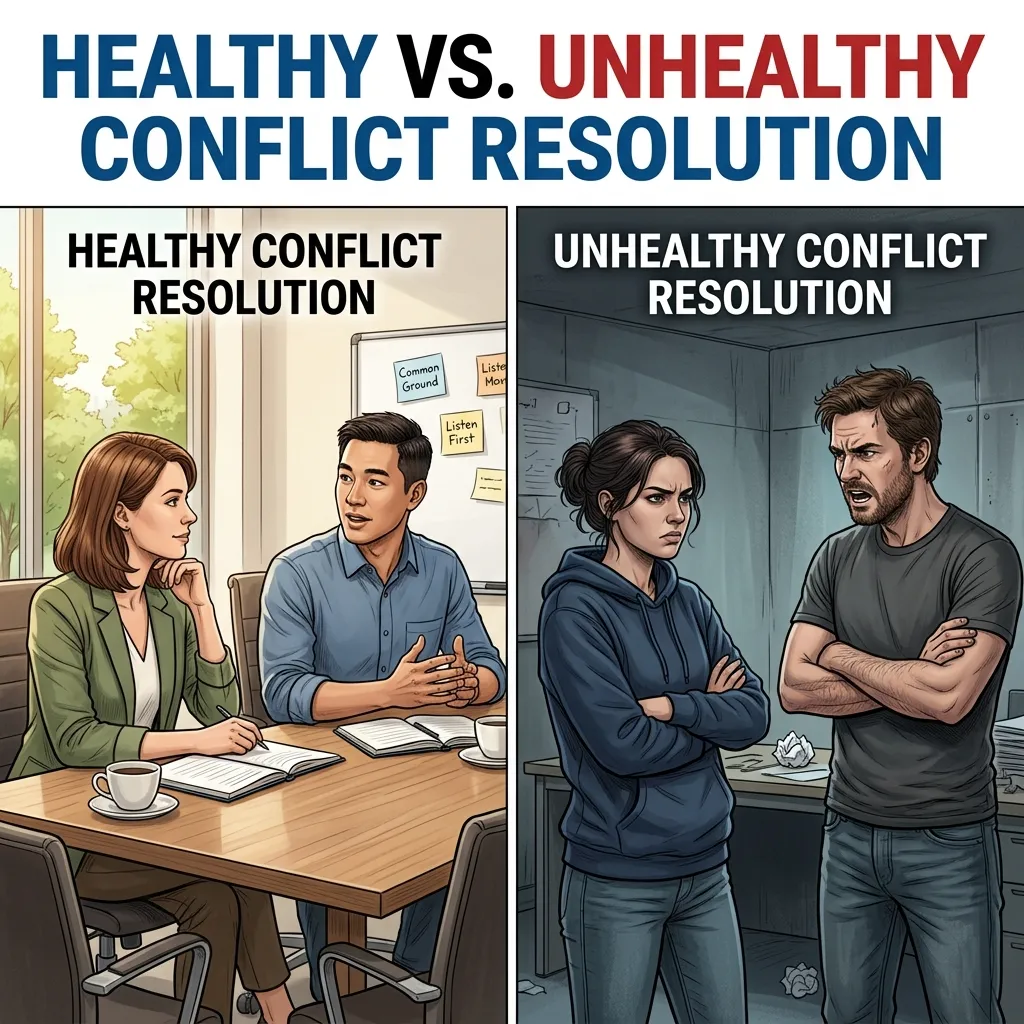 Understanding the difference between productive and destructive communication can help you course-correct during an argument.
|
Feature |
Unhealthy Conflict Resolution |
Healthy Conflict Resolution |
|---|---|---|
|
Focus |
Attacking the partner’s character |
Addressing the specific behavior |
|
Goal |
Winning the argument |
Finding a mutual solution |
|
Tone |
Sarcastic, loud, or dismissive |
Calm, respectful, and curious |
|
Body Language |
Crossed arms, eye-rolling, turning away |
Open posture, eye contact, leaning in |
|
Outcome |
Resentment, distance, and unresolved anger |
Deeper understanding, compromise, and connection |
Conclusion
Fixing communication issues in a relationship requires patience, empathy, and a willingness to examine your own emotional triggers. By shifting away from blame and prioritizing emotional safety, you can transform conflict into an opportunity for deeper intimacy. Start implementing active listening today, and watch your partnership grow stronger. Ready to improve your connection? Schedule a weekly check-in with your partner tonight.
Frequently Asked Questions
1. What are the most common communication issues in a relationship?
The most frequent communication issues in a relationship include poor listening, assuming your partner’s thoughts, passive-aggressive behavior, and defensiveness. These patterns slowly damage trust and prevent couples from openly resolving real emotional problems, leading to repeated misunderstandings and distance.
2. How do we stop having the same argument repeatedly?
Repeated conflicts are a sign of deeper communication issues in a relationship that are not being addressed. Instead of focusing only on surface problems, identify the emotional need behind the argument—such as feeling ignored or unvalued—and communicate those feelings clearly.
3. Can a relationship survive a complete breakdown in communication?
Yes, a relationship can survive if both partners remain committed to learning new skills. Survival requires mutual effort to rebuild emotional safety, often with the help of a professional therapist who can guide the couple out of toxic interaction cycles.
4. How do I communicate with a partner who stonewalls?
Stonewalling often happens when communication issues in a relationship become overwhelming for one partner. Instead of forcing conversation, take a break and agree to return later when emotions are calmer, allowing space for more productive and respectful dialogue.
5. Why do we only communicate well when things are calm?
Many communication issues in a relationship worsen under stress because the brain struggles to regulate emotions. Stress reduces logical thinking, making conversations more reactive. Practicing calm communication techniques helps maintain understanding even during difficult moments.
6. Is texting a good way to resolve relationship conflicts?
Texting can increase communication issues in a relationship because it removes tone, emotion, and body language. Serious discussions are better handled face-to-face or via call, where both partners can express feelings clearly and avoid misunderstandings.
7. How does my childhood affect my relationship communication?
Childhood experiences often shape communication issues in a relationship by influencing attachment styles and emotional responses. If you grew up avoiding conflict, you may struggle with open expression today. Awareness helps break unhealthy patterns and build better communication habits.
8. What should I do if my partner refuses to go to therapy?
You cannot force someone into therapy. However, you can attend individual counseling to learn better boundary-setting and communication skills for yourself. Often, when one partner changes their reaction dynamic, it positively shifts the entire relationship.
9. How long does it take to fix communication issues in a relationship?
Improving communication is an ongoing process, not a quick fix. While you might notice positive changes within a few weeks of practicing active listening and using “I” statements, deeply rewiring negative habits usually takes several months of consistent effort.
10. How do I express my needs without sounding needy or critical?
Frame your needs positively by focusing on what you want rather than what you lack. Instead of saying, “You never spend time with me,” say, “I really love connecting with you, and I would love to schedule a dedicated date night this week.”